Tuber melanosporum
Rigour and teaching on the black truffle: biology, territory, research and quality.
Biology and ecology
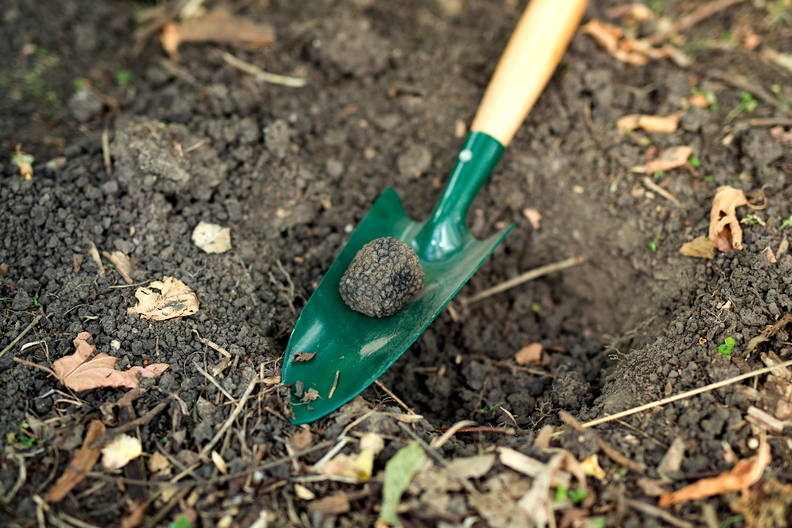
The black truffle (Tuber melanosporum) is a hypogeous fungus: the fruiting body forms underground, in winter, associated with the roots of holm oaks and oaks. That symbiosis — mycorrhiza — feeds the tree and lets the fungus complete its cycle.
It needs well-drained calcareous soils and a Mediterranean climate with seasonal contrast. Harvest runs from December to March. From planting an inoculated tree to the first crop can take several years.
Production areas
Catalonia has favourable agro-climatic conditions in several counties. The map is a territorial reference: it frames potential areas, not farms. Holdings are not located.
- Solsonès
- Osona
- Berguedà
- Alt Urgell
- Terra Alta
- Noguera
- Segarra
- Bages
- Ripollès
- Pallars Jussà
The counties listed are territorial references. No farms or producers are pinpointed.
R&D
The Forest Science and Technology Centre of Catalonia (CTFC) researches truffle growing, climate change and the agroforestry mosaic. Work with the University of Lleida has validated systems that shorten time to harvest and also work outside traditional truffle areas.
This site transfers that knowledge to the sector: soils, inoculated plants, irrigation, sensors and agronomic monitoring, with scientific judgement at the centre.
Quality guide
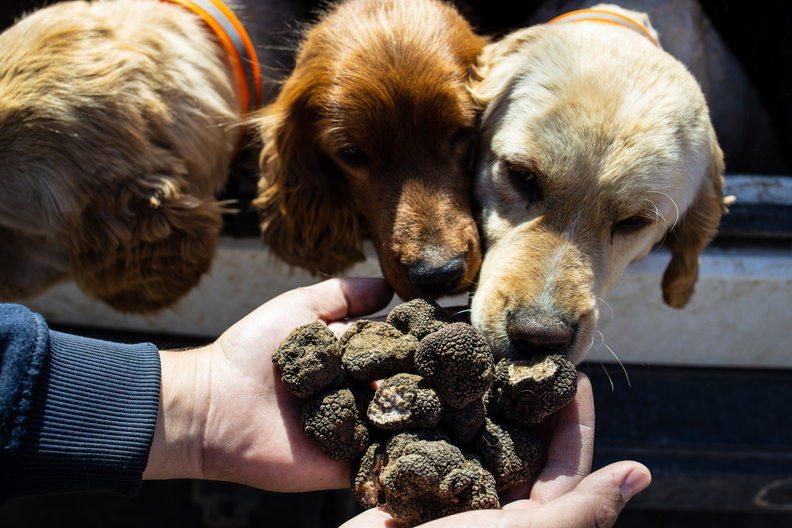
Telling Tuber melanosporum apart from other species, and spotting fraud (synthetic aromas, substitute species), is part of teaching the product.